What Are Receding Gums?
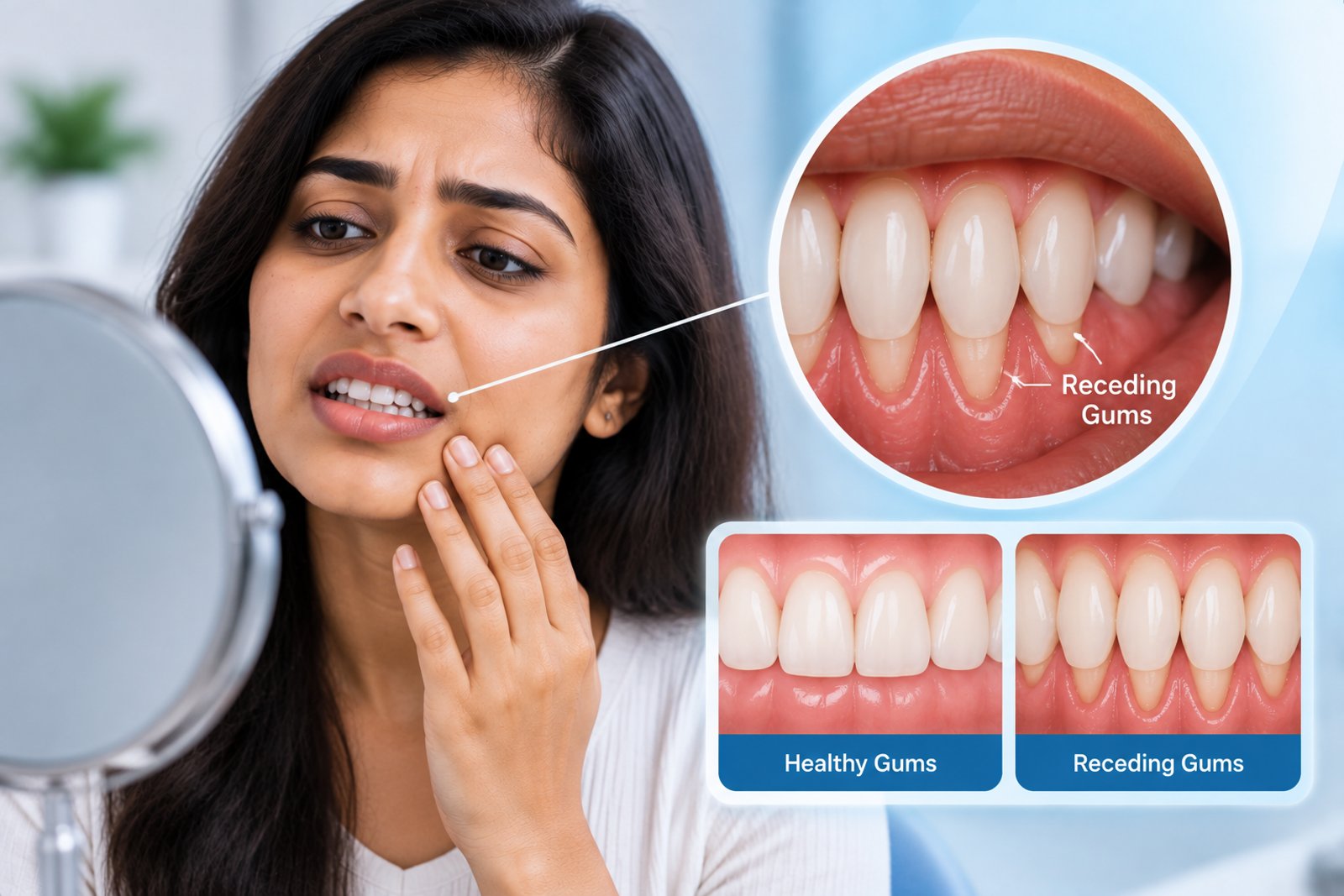
Receding gums happen when the gum tissue pulls back from the teeth. As a result, more of each tooth shows, making them look longer. Often, people notice this change while brushing or smiling. Receding gums are a common sign of gum disease. However, other factors can also cause this problem. According to the CDC, gum disease affects many adults. Early care is important to protect your oral health.
Common Symptoms of Receding Gums
Sometimes, you may not notice receding gums right away. Still, several signs can help you spot the problem early. For example, you might see or feel changes in your mouth. Watch for these symptoms:
Because these symptoms can get worse over time, early detection is key. If you notice any of these signs, consider seeing a dentist near you for advice.
Causes and Risk Factors
Many things can lead to gum recession. While gum disease is a top cause, other habits and health issues also play a role. Understanding these gum recession causes can help you protect your smile. Common causes and risk factors include:
Because some risk factors are out of your control, regular dental visits are important. Still, you can lower your risk by following good oral health tips every day.
How Dentists Diagnose Receding Gums
First, your dentist will look at your gums and teeth during a check-up. They may use a small tool to measure how far the gums have pulled away. This tool helps check the depth of the space between your teeth and gums. Next, your dentist may take X-rays to see if bone loss has happened. In some cases, they will ask about your brushing habits and health history. Because early diagnosis leads to better results, regular check-ups are important. If you need local dental care, search for a dentist near you who offers gum health exams.
Treatment Options for Receding Gums
Treatment for receding gums depends on how severe the problem is. For mild cases, simple changes in daily care may help. However, advanced gum recession may need dental procedures. Common treatment options include:
Because each case is different, your dentist will suggest the best treatment for you. Always follow your dentist’s advice to protect your gums and teeth.
Tips for Preventing Gum Recession
Although not all gum recession can be prevented, you can lower your risk. Healthy habits make a big difference. Try these tips for preventing gum disease and keeping your gums healthy:
Because prevention is easier than treatment, start these habits early. Your dentist can also share more oral health tips during your visits.
Daily Oral Care and Lifestyle Guidance
Good daily care is the best way to keep your gums healthy. For example, brush twice a day and floss once daily. Use gentle, circular motions when brushing. In addition, choose toothpaste and mouthwash made for gum health. If you have sensitive teeth, ask your dentist for product suggestions. Furthermore, limit sugary snacks and drinks. Instead, eat more fruits, vegetables, and whole grains. Because stress can affect your oral health, try to manage it with exercise or relaxation. Finally, keep up with dental visits for early detection and care. If you need help, look for a dentist near you who offers advice on gum health and preventing gum disease.
Connect with our experts at En Brace Dental Hospital for the right guidance and care.