
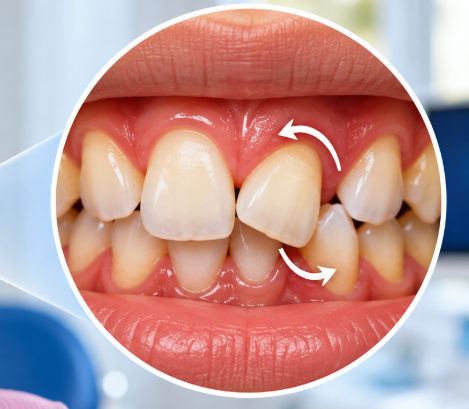
What Is Tooth Rotation?
Tooth rotation is when a tooth turns or twists out of its normal position. This can make the tooth look crooked or out of line with the others. Often, tooth rotation affects front teeth, but it can happen to any tooth. Because tooth rotation can change your smile, many people look for ways to fix rotated teeth. Dentists call this condition “tooth rotation.”
Common Causes of Tooth Rotation
There are several causes of tooth rotation. Some people are born with teeth that are more likely to twist. Others develop rotated teeth over time. For example, baby teeth that fall out too early can leave space for adult teeth to move. In addition, crowded teeth may push against each other and cause rotation.
According to dental journals, these causes are common in both children and adults.
Recognizing the Symptoms of Tooth Rotation
Tooth rotation can be easy to spot. However, sometimes the signs are mild. You may notice one or more teeth look twisted or turned. Sometimes, rotated teeth make it hard to bite or chew. In some cases, you may feel pain if the tooth rubs against others or the gums.
For many people, these symptoms can affect daily life. Yet, some people may not notice any discomfort.
How Dentists Diagnose Tooth Rotation
First, dentists look at your teeth during a dental exam. Next, they may take dental X-rays to see how the teeth are positioned. Sometimes, dentists use special models of your teeth to plan treatment. Because early diagnosis helps, regular dental checkups are important.
With these tools, dentists can find out how severe the tooth rotation is and suggest the best treatment.
Treatment Options for Tooth Rotation
There are several ways to fix rotated teeth. The right treatment depends on your age, the cause, and how much the tooth has turned. For children, early treatment can prevent bigger problems later. Adults can also benefit from rotated teeth treatment.
According to the American Association of Orthodontists, braces and aligners are the most common ways to fix tooth rotation.
Preventing Tooth Rotation
While not all cases can be prevented, some steps can lower the risk. For example, regular dental visits help spot problems early. In addition, stopping habits like thumb sucking can protect teeth. If a baby tooth falls out early, a dentist may use a space maintainer to keep other teeth from moving.
Because prevention is easier than treatment, these steps can help keep teeth in their best position.
Daily Oral Care Tips for People with Tooth Rotation
Good oral care is important for everyone, but it is even more important if you have rotated teeth. Because rotated teeth can be harder to clean, food and plaque may build up. This can lead to cavities or gum problems.
With these daily habits, you can keep your teeth and gums healthy, even if you have tooth rotation.
Conclusion
If you notice twisted or turned teeth, do not wait to seek help. Schedule a visit at En Brace Dental Hospital to explore safe and effective treatment options for a healthier smile.